Designing 'Retrofit as a Service’: From one-off projects to systems
Our Lead Service Designer, Vicky Houghton-Price, unpacks how thinking about retrofit as a service helps us move away from individual projects, to designing around people's actual needs.
In our last post we introduced how Warmer Homes London uses a "Test, Learn, and Scale" approach to turn day-to-day delivery challenges into system-wide insights. But what are those insights actually telling us?
The biggest realisation is that approaches to retrofit have been fragmented and we would benefit from thinking about retrofit as a service rather than isolated one-off construction projects or discrete grant programmes. Thinking about retrofit in this way shifts our focus from numbers of measures installed and levels of grant delivered, to the journey residents, delivery teams and installers go on and whether their needs are met at each stage.
It also means looking beyond individual projects to understand the overall decarbonisation and wellbeing outcomes we are trying to achieve across the region.
The problems we see at the moment
Right now, much of public-sector retrofit delivery is organised around delivering individual grants each with specific criteria and eligibility, rather than delivering an end-to-end service to support diverse local residents to access the right support to make their homes greener, more efficient, and through that improve wellbeing. When we think of our role as grant delivery as opposed to service delivery, we may meet some of our KPIs but cracks begin to appear at a system and human level
The problem isn't the grant itself. Grants are an essential enabler. The challenge is that we can treat the grant as the end goal, rather than as a tool for improving peoples homes. When retrofit is organised around funding programmes rather than end-to-end user needs, the impacts are felt across the ecosystem:
- For residents: Timelines can stretch out so long that eligible households drop out through sheer exhaustion. Meanwhile, the "missing middle" - those who don't qualify for low-income grants but can't afford the upfront costs alone -are often left with no clear pathway or support.
- For local authorities and housing associations: Teams can find themselves in a reactive cycle of stop-start planning, shaped by funding windows rather than integrating it into their wider repairs and asset management cycles that could address what their housing stock really needs. Teams are forced to prioritise assets based on what can be done within the funding window – not what needs retrofit the most.
- For the supply chain: Uncertainty in future demand makes it difficult for contractors to invest in accreditations, equipment and workforce growth, limiting the capacity needed to scale delivery.
- For the wider system: The entire process becomes slow, friction-heavy, inefficient, and expensive.
Shifting the focus towards the needs of someone delivering or receiving the service, will force us to think about how each element is joined up together and mend some of the broken parts of the system.
What does ‘Retrofit as a service’ actually mean?
At its core, retrofit as a service means designing around people's needs rather than around individual projects or funding programmes.
Residents need a warm, healthy, and affordable home. Housing providers need a practical way to improve their housing stock and support residents over the long term. Grants, data, technology and installation programmes are all important. But they are enablers rather than the end goal.
A service design approach helps us understand those needs and design the systems around them. It requires us to consider both the experience people have when navigating retrofit and the behind-the-scenes processes, partnerships and funding mechanisms needed to make that experience work. This shifts the focus from delivering activities and outputs, to helping people achieve the outcomes they actually care about.
If we begin to shift our approach from a project to a service mindset, what we build may end up looking quite different:
- For residents, that means moving from fragmented interactions and requirements that shift across different grant programmes, to a ‘Single Front Door’ where eligibility, progress tracking, and communication are all in one place. If a household doesn't fit the criteria for a particular grant, they aren't met with a dead end, but are guided towards a pathway that best meets their needs, whether that's subsidised, blended or self-funded.
- For local authorities and housing associations, retrofit is no longer a one-off intervention, planned around short-term, reactive funding timelines. Instead, it's integrated into long-term property care, enabling homes to be maintained and improved over time. This approach extends beyond individual homes, helping to coordinate retrofit with repairs, maintenance, voids and wider local investment, reducing disruption for residents and improving efficiency.
- For the supply chain, businesses are no longer constrained by stop-start demand and left bidding for small funding pots with changing requirements. Simplified access, clearer pipelines and aggregated demand create the confidence to invest in skills, accreditation, equipment and workforce growth.
How we're getting started
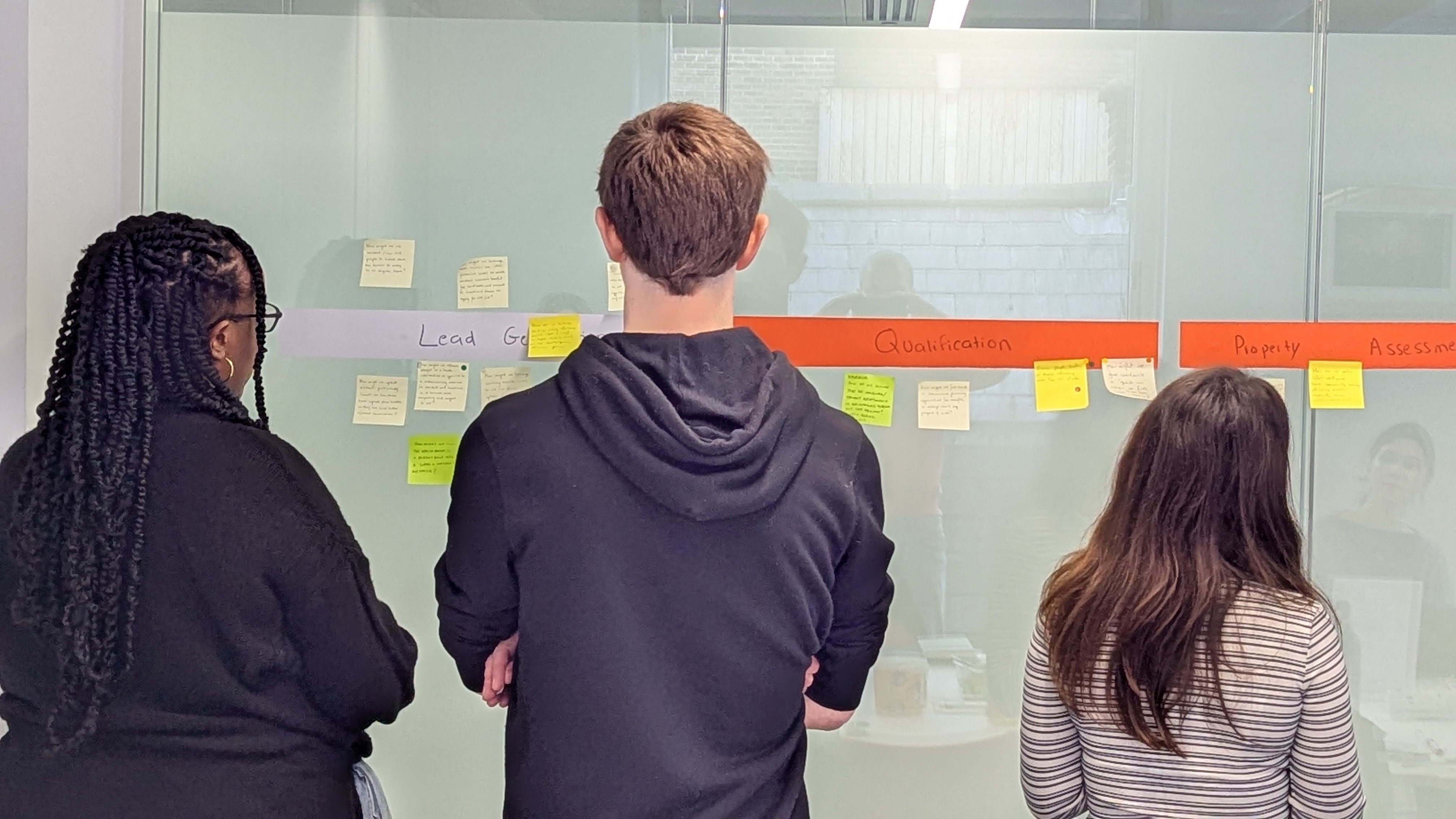
Let’s be honest: executing a service-led shift immediately across a city of nine million people is incredibly difficult. We gravitate to working in projects because it’s easier to compartmentalise the challenge and fit into governmental siloes. Systems change is complex because you aren't just designing digital interfaces or internal workflows; you are actively shaping a market.
But a lack of perfect conditions shouldn’t paralyse us. Instead, having learned a lot from delivering grant programmes, we’re starting where we know we can make a difference, in 3 key areas:
- A digital ‘front door’ for residents: The retrofit journey can be quite long and opaque, and this leads to residents disengaging and dropping out. We’re building a digital platform designed to help make the journey clearer for residents, so they know what to expect. instead of having multiple contractors and organisations to communicate with, the platform creates a single touchpoint even if on the back end lots of different parties are contributing to the service.
- Making housing data more useful for planning: Patchy property data creates headaches for teams throughout the retrofit process: it also limits us from moving beyond individual homes, to creating knowledge on common housing types across the city. We're working to group properties into common archetypes across London, helping move the conversation from individual projects to shared patterns and needs. This creates opportunities for more coordinated planning, lower delivery costs and a stronger understanding of what works across different housing types
- Building trust alongside technical solutions: Technology and data mean nothing if a resident won't let an installer through their front door. That’s why we’re trialling offering local, in-person support for residents to help them navigate the process, demystify low-carbon technologies like heat pumps and build the social capital required for area-based upgrades.
The bigger changes that need to come
The work we're doing today is only the beginning. Creating clearer journeys, better data and stronger trust can help improve the experience of retrofit delivery, but they won't solve some of the deeper challenges on their own.
As we build evidence from delivery, we plan to explore some of the bigger system changes needed to support retrofit at scale:
- Designing funding around delivery realities: Funding is a critical enabler, but programmes need to work with the realities of residents, local authorities and delivery partners, supporting long-term planning rather than short-term cycles.
- Creating more joined-up delivery models: Whether through area-based approaches, coordination with asset management programmes, or alignment with wider infrastructure investment, there is an opportunity to deliver retrofit in ways that are more efficient, less disruptive and better integrated into the life of a home and its community.
- Integrating retrofit with health and wellbeing outcomes: energy efficient homes deliver benefits far beyond energy efficiency. By strengthening connections between housing and health services, we can target support where it has the greatest impact and help address the wider causes of poor health and fuel poverty.
Working in this way will allow us to scale retrofit
Ultimately, people don't experience grants, programmes or delivery models. They experience homes.
If we want retrofit to reach the scale required, we need to spend less time optimising individual parts of the system and more time designing how those parts work together. By focusing on the needs of residents, communities and delivery partners, we can create services that are easier to navigate, more efficient to deliver and better able to achieve the outcomes that matter.